A landmark at Sidcup station
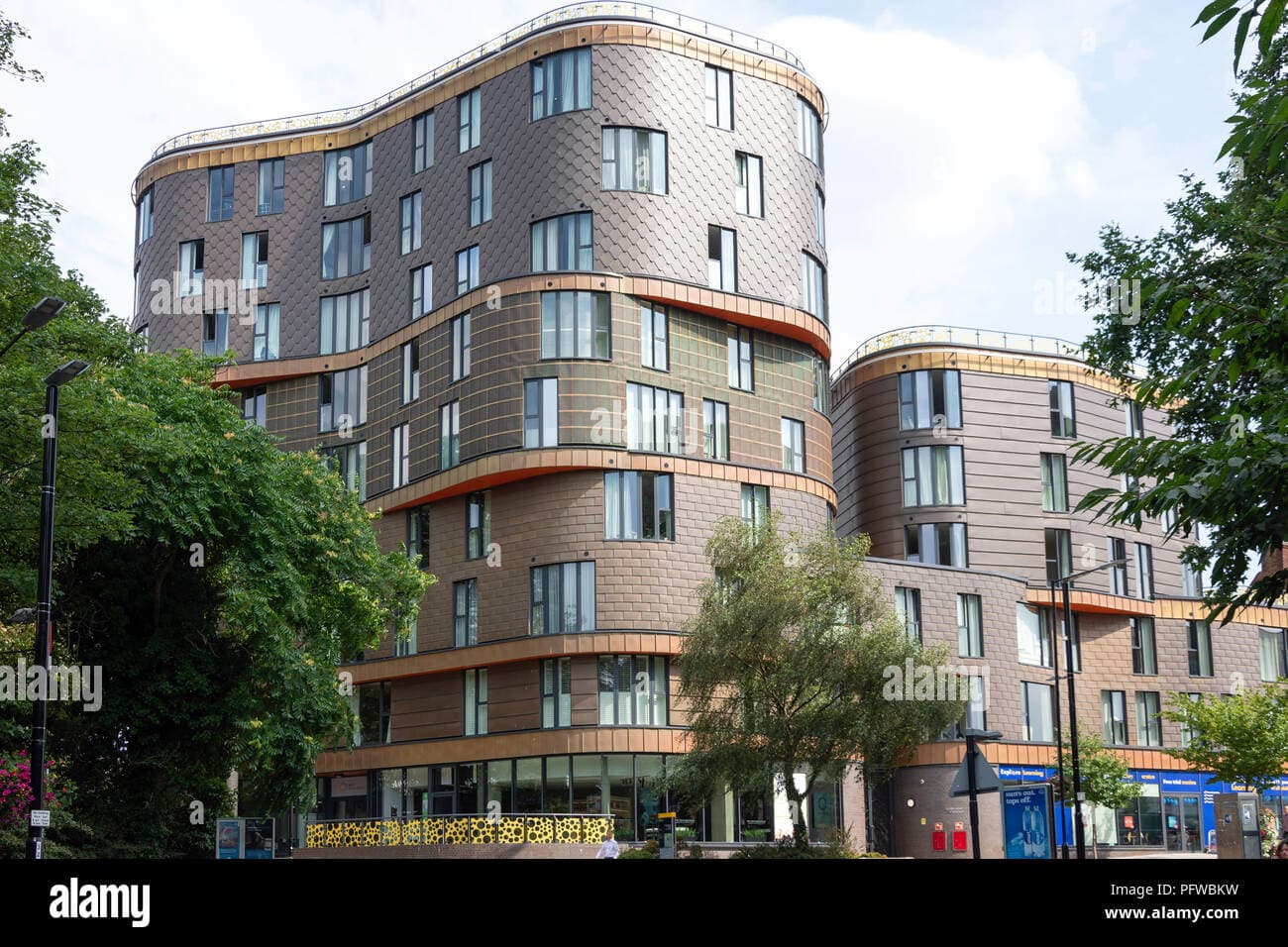
The Fold in Sidcup, DA15, was a 98-apartment mixed-use scheme completed in 2013 by United House, a BREE legacy company. Valued at around 20 million pounds and developed by United House Developments, the nine-storey building sits next to Sidcup station on Station Road, giving it a prominent position in the town centre.
Designed by Studio Egret West, the scheme combined 98 homes with commercial space on the ground floor, including restaurant, office and retail uses, across a total of around 6,500 square metres.
The town-centre location next to the station made the site a natural focus for higher-density housing, with the building rising to nine storeys to make the most of a constrained plot beside the railway. Its prominence meant the design carried real responsibility for the look and feel of this part of Sidcup.
A folding metallic facade
The building takes its name from its distinctive folding facade, a curved metallic envelope that gives The Fold its strong architectural identity. The copper-alloy cladding system, installed by specialist subcontractors, wraps the building in a golden, faceted skin that catches the light and marks the scheme out within Sidcup.
The cladding and facade engineering were central to realising Studio Egret West's design, turning a town-centre apartment block into a genuine local landmark.
Mixed use in the town centre
By placing active commercial uses at ground level beneath the homes, The Fold contributed to the vitality of Sidcup town centre while adding apartments close to the station. The scheme went on to feature in the architect's awards listings, reflecting the quality of the completed building.
The Fold remains a recognisable example of BREE's legacy work delivering design-led, mixed-use residential development in outer-London town centres.
The development also brought additional footfall and activity to Station Road, supporting nearby shops and services in the town centre. Its completion in 2013 gave Sidcup a confident piece of contemporary architecture at one of its busiest points, and the building has remained a recognisable feature of the area ever since.