A brutalist landmark in Poplar
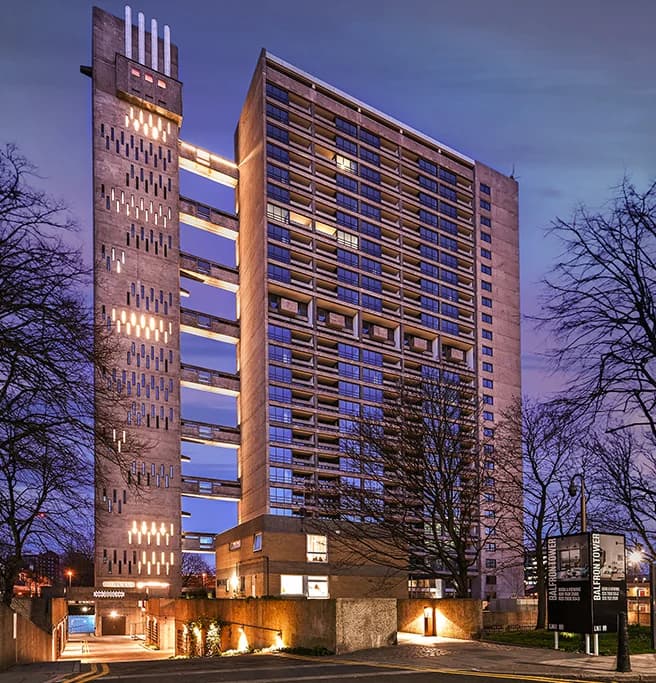
Balfron Tower is the celebrated brutalist residential block in Poplar, E14, designed by Ernő Goldfinger and a forerunner to his Trellick Tower. The refurbishment of the listed building was set up as a joint venture, with BREE legacy company United House involved in the early phase alongside Poplar HARCA and other partners to bring the ageing tower back into use.
The scheme set out to retain and restore the architectural significance of the 146-home tower while modernising the apartments and communal areas for a new generation of residents.
Refurbishing a Grade II* listed building of this importance meant balancing the conservation of Goldfinger's original design intent with the practical work of upgrading services, fabric and amenities for modern living. The early development work set the framework for the retrofit that followed.
From United House to Telford Homes
United House held a stake in the joint venture during the early development of the project. In September 2015, the company sold its stakes in Balfron Tower and three other London regeneration schemes to Telford Homes, exiting the project before construction completion.
Telford Homes subsequently took the refurbishment through to practical completion as principal contractor, working with Studio Egret West on the retrofit. The completed scheme has since been widely praised, with the restored interiors and apartments drawing extensive design coverage and award recognition.
By the time of the sale, the project had moved from concept toward delivery, and the change of ownership marked a clean transition of the scheme to a developer who would see the refurbishment through. The restored tower has since reopened with apartments brought back into residential use.
An honest record of involvement
BREE Construction's connection to Balfron Tower runs through its legacy United House business and the early joint-venture phase of the project. The eventual delivery and completion of the refurbishment was carried out by Telford Homes following the 2015 transaction.
The tower remains one of London's most significant pieces of post-war residential architecture, and its careful revival has returned a heritage landmark to active residential life.