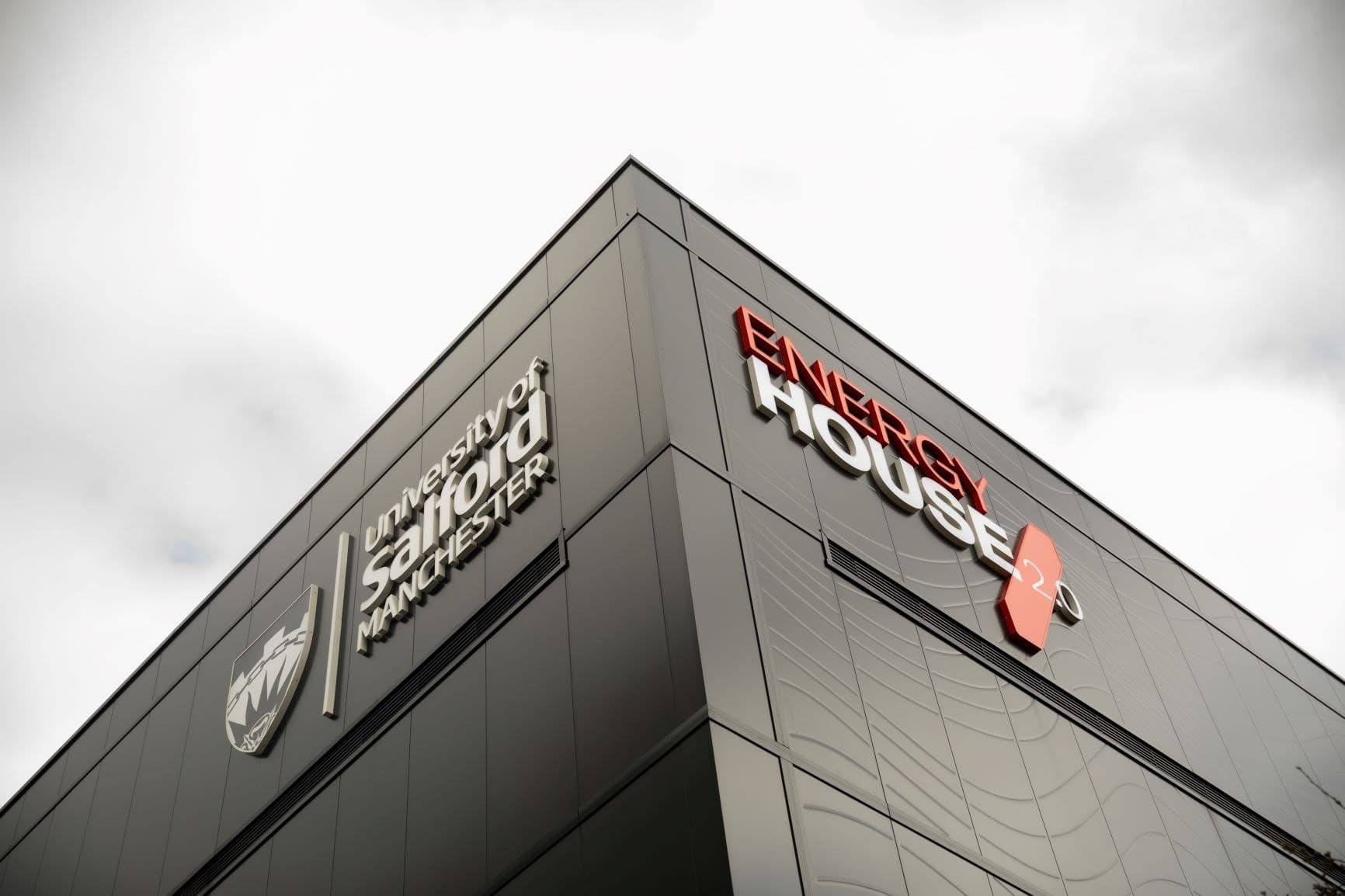
The University of Salford has secured £8.56 million from UK Research and Innovation (UKRI) through the Local Innovation Partnerships Fund for RAMMIC, a new national centre exploring the advanced materials and manufacturing processes needed to retrofit existing homes and buildings towards Net Zero.
BREE Construction (formerly United Living) is among the partners building the full-scale test houses at the University's Energy House 2.0 facility, alongside Barratt Redrow, the University of Manchester, Sustainable Ventures and the Energy Innovation Agency.
The Retrofit Advanced Materials and Manufacturing Innovation Centre (RAMMIC) is led by the University of Salford in partnership with the University of Manchester, Sustainable Ventures and the Energy Innovation Agency. Its award is drawn from a national £500 million innovation programme, made through the Greater Manchester Combined Authority's Local Innovation Partnerships Fund.
RAMMIC will explore how advanced materials and modern manufacturing can help decarbonise the UK's existing buildings. An estimated 27 million homes and 1.8 million non-domestic buildings need energy-efficiency retrofits to meet Net Zero targets. As well as cutting emissions, the centre aims to open new markets for business and deliver warmer, healthier homes, lower bills and reduced fuel poverty.
At the heart of the programme, BREE Construction is building a full-scale 1930s house inside Energy House 2.0. A 1980s home is being built alongside it by Barratt Redrow, with funding for the two houses from the Garfield Weston Foundation. Together they represent the older, hard-to-treat housing types that make up much of the UK's stock, giving researchers and innovators a realistic, repeatable setting to trial retrofit products and measure how they perform.
Energy House 2.0 is a world-leading facility whose two environmental chambers can recreate almost any climate, from minus 23 to plus 52 degrees Celsius, with wind, rain, snow and solar gain. Testing whole houses under controlled conditions produces accurate performance data far faster than conventional methods, saving time and cost.
“RAMMIC represents a major opportunity for industry to come together with academia and policy makers to help shape the future of retrofit for the built environment.”